
 영어
영어 中文简体
中文简体 Русский
 Español
 Português
 Türkçe
 العربية
 Deutsch
 Polski
 Italiano
 Français
 한국어
한국어 ไทย
ไทย Tiếng Việt
 日本語
日本語
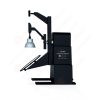

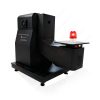




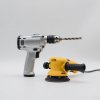







전원 코드 고정 인장력 및 토크 테스트 장치
사용자 설명서
적용 할 수있는 LISUN 모델: LNSYJ-1
Chapter 1 : 소개
The tensile-torsion testing machine complies with the requirements of standards such as IEC 60335, IEC 60598, GB 4706, and GB 7000, and is designed to test the torque of household and similar electrical appliances and to verify the secure fastening of power cord clamps.

Chapter 2: Technical 기술 사양
- Power Supply: AC 220 V, 50 Hz, 5 A;
- Pulling time: 1 second per cycle (adjustable);
- Number of pulls: Adjustable from 0 to 999999;
- Force range: 30 N, 60 N (composed of two 30 N units), 100 N (composed of two 30 N units and one 40 N unit);
- Torque range: 0.08 N·m, 0.1 N·m, 0.15 N·m, 0.25 N·m, 0.35 N·m;
- Use appropriate fixtures to secure the test specimen so that both the specimen and the fixture are positioned on the same horizontal plane.
Chapter 3: Operating Procedures
- 인장 시험
- Adjust the position of the pull rod: When conducting a tensile test, the pull rod must be aligned with the center of the power cord being tested.
조정 단계:
- Loosen the locking handle on the sliding sleeve, hold the workhead, and move it up and down along the column so that the pull rod and the power cord are at the same level, then tighten the handle;
- Push the tensioning mechanism against the specimen until it is flush with it, aligning the tension rod with the power cord, while ensuring that the stop block in front of the tension rod presses vertically against the exit surface of the power cord.
- Securing the Power Cord: First, mark the power cord 20 mm from the exit point, insert the cord into the clip’s slot, and pull it tight.
- Number of Preset Tests
- Connect the power supply and conduct the test.
- First, place the weights of the corresponding mass on the pan, then turn on the power switch on the control panel.
- Press the reset button to reset the counter. Then press the test button again, and the motor will move up and down to perform a tensile test on the power cord. When the number of test cycles reaches the preset value, the test will stop automatically.
- Turn off the power, unplug the power cord, and use a caliper to measure the distance from the mark to the exit. Subtract 20 mm from this measurement to obtain the post-test elongation.
- Torque Test (No power required; manually operated)
1. Secure one end of the nylon rope to the clamping screw on the outside of the sleeve. Turn the pull rod to wind the nylon rope around the outer circumference of the sleeve (2 or 3 turns should suffice). Then drape the nylon rope over the roller, leaving the other end hanging freely.
2. Clamp the power cord according to the steps outlined in the tensile test method described above, then hang the weight on the end of the suspended nylon rope. At this point, the nylon rope is pulled by the weight of the mass. The nylon rope drives the sleeve, the pull rod, and the power cord under test to rotate together, subjecting the power cord to torsional force. The test duration is 1 minute. After one minute, remove the mass, unclamp the power cord, and inspect it.
Chapter 4: Maintenance and Care
- Before starting work, check for loose fasteners and tighten any that are loose.
- Nylon ropes will wear out after repeated use, so you should keep several on hand to replace them promptly.
- Moving parts such as posts, tie rods, and sleeves should be lubricated regularly.
- Turn off the power when not in use.
Chapter 5: Packing List
| 그렇지 않습니다. |
이름 |
단위 |
수량 |
| 1 |
Tensile-Torsion Testing Machine |
Taiwan |
1 |
| 2 |
Tension weights: 30 N × 2, 20 N × 1, 40 N × 1 |
세트 |
1 |
| 3 |
One torque weight each of 0.08 N·m, 0.1 N·m, 0.15 N·m, 0.25 N·m, and 0.35 N·m |
세트 |
1 |
| 4 |
사용 설명서 |
일부 |
1 |
| 5 |
보증 카드 |
일부 |
1 |
| 6 |
적합성 인증서 |
일부 |
1 |