
 영어
영어 中文简体
中文简体 Русский
 Español
 Português
 Türkçe
 العربية
 Deutsch
 Polski
 Italiano
 Français
 한국어
한국어 ไทย
ไทย Tiếng Việt
 日本語
日本語
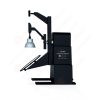

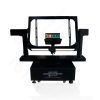













비금속 및 복합 도관용 굽힘 장치
사용자 설명서
적용 할 수있는 LISUN 모델: LS-B52
1. 장비에 대한 기본 이해
1.1 주요 매개변수
| 파라미터 | 주의 사항 |
| Nominal Diameter of the Sample Conduit | 16, 20, 25mm |
| Radius at the bottom of the mold cavity | 48, 60, 75mm |
| The radius of the arc described by the center of a curved roller | 84105, 131.25mm |
| Groove Radius of Forming Dies and Bending Rolls | 8.1, 10.1, 12.6mm |
| Diameter at the bottom of the bending roller | 24, 30, 37.5mm |
This device is designed for specialized testing of the mechanical properties of non-metallic cable conduits.
It is primarily used in electrical product testing laboratories, quality control departments at cable and conduit manufacturers, third-party testing organizations, and for import and export product inspections.
1.2 적용 가능한 표준
Strictly in accordance with GB/T 20041.21-2017 “Conduit Systems for Cable Management—Part 21: Special Requirements for Rigid Conduit Systems,” and Figure 10.4.102 (corresponding to Clause 10.4.102 and Figure 103 of IEC 61386-21:2021), and subjected to testing.
1.3 전자 문서 다운로드
전자 사용자 설명서, 교정 인증서, 보증서 및 기타 문서의 다운로드 링크는 제품 발송 시 이메일로 이미 보내드렸습니다. 즉시 다운로드해 주시기 바랍니다. 만약 이메일을 받지 못하셨다면, 저희에게 연락하여 다운로드 링크를 다시 요청해 주십시오.
2. 사용상의 주의
2.1 운영 환경 안전 요구사항
작동 환경 온도: 15°C ~ 35°C; 상대 습도: 45% ~ 75%; 결로 현상 없음, 부식성 가스 없음, 공기 중 분진 없음.
진동 발생원으로부터 멀리 떨어진, 사방으로 최소 30cm의 여유 공간을 확보한 평평하고 안정적인 작업대에 기기를 놓으십시오.
2.2 Safety Guidelines for Operational Procedures
During testing, do not reach into the test area with your hands or any other part of your body to prevent crush injuries.
The test specimen must be securely mounted to prevent it from falling or ejection during loading, which could pose a safety hazard.
3. 테스트 설정 소개
3.1 표준 다이어그램
그림 3-1을 참조하십시오(IEC 표준에서 발췌).
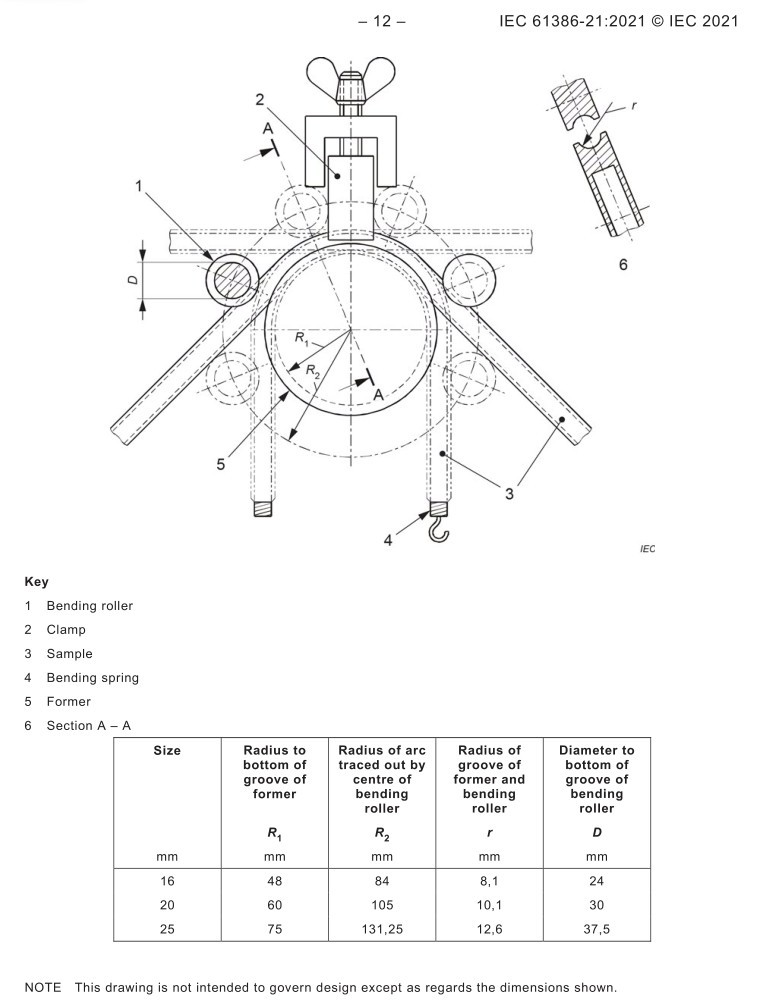
그림 3-1
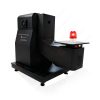
3.2개의 제품 사진
그림 3-2를 참조하세요.
| 번호 | 주의 사항 |
| ① ② ③ | Specimen mounting holes, available in 16, 20, and 25 mm sizes |
| ④⑤⑥ | Molding Die |
| ⑦⑧⑨ | Curved Rollers |
| ⑩ | Curved roller handle: Pull the handle down to bend the installed tubing. |
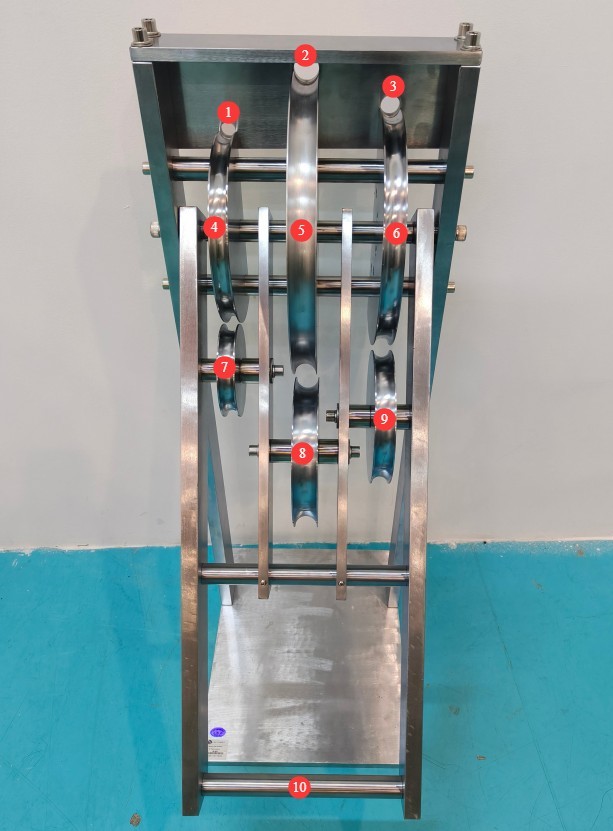
그림 3-2
4. Catheter Bending Test
4.1 샘플 전처리
The length of the test specimen is approximately 500 mm; tests using specimens of other dimensions should be conducted in accordance with the manufacturer’s instructions.
Before the bending test, the bending aid shall be inserted into each test specimen. The bending aid shall consist of a spring formed by coiling a square-section metal wire; the spring shall be free of burrs, and its outer diameter shall be 0.7 mm to 1.0 mm smaller than the specified minimum inner diameter of the catheter; alternatively, a bending aid recommended by the manufacturer may be used.
Before the test, place the specimen, which has been fitted with the bending aid, in a freezer for at least 2 hours. The temperature of the freezer should be maintained at the values shown in the table below (with a tolerance of ±2 °C).
| Catheter Classification | Transportation, installation, and operating temperatures must not be lower than (unit: °C) |
| 1 | +5 |
| 2 | -5 |
| 3 | -15 |
| 4 | -25 |
| 5 | -45 |
4.2 테스트 실행
The bending apparatus should be placed next to the freezer, and the test should be conducted within 12 seconds of removing the specimen from the freezer.
First, lift the bending roller handle so that the test specimen passes through the mounting hole and is placed in the groove of the forming die; simultaneously, gently clamp it with the clamping device. Next, gently press down on the bending roller handle and move the bending roller around the forming die. Upon releasing the bending roller, the specimen should be bent to (90±5)°. At the same time, the bending aid should be removable without damaging the specimen or the bending aid itself.
4.3 시험 결과 평가
After testing, the specimen must not exhibit any cracks visible to the naked eye or with corrected vision without additional magnification; furthermore, it must allow the corresponding gauge shown in Figure 4-1 (taken from the IEC standard) to pass through the tube under its own weight without any initial velocity.
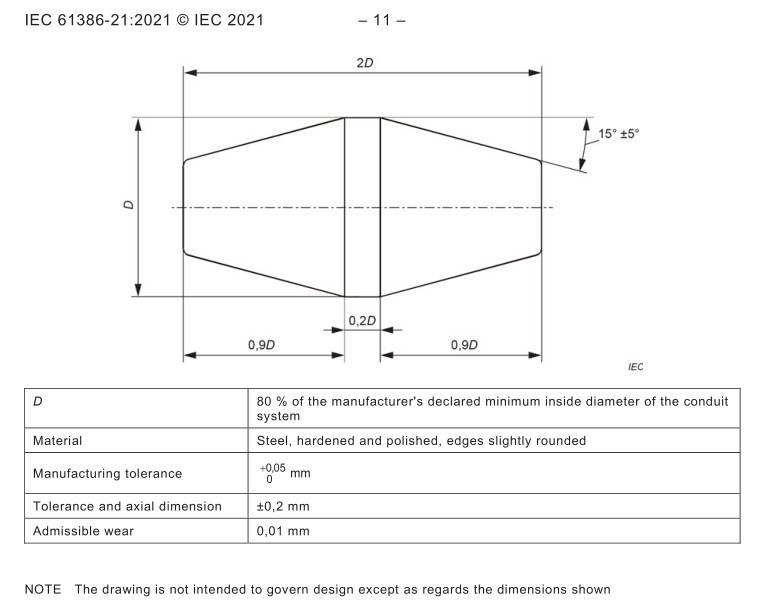
그림 4-1
5. 테스트 후 절차
5.1 장치 재설정
Outside of testing hours, do not install test specimens in the testing equipment to prevent the application of force when testing is not in progress.
5.2 샘플 준비
시험에 합격한 샘플과 불합격한 샘플을 분리하고, 명확하게 표시하여 혼동을 피하십시오.
5.3 시험장 청소 및 정리
Wipe dust and debris from the surface of the device with a lint-free, soft cloth; do not rinse the equipment directly with water.
Organize the tools on the workbench, arrange them neatly, and clean up any debris generated during the experiment.
6. 정기 유지보수 및 관리
6.1 정기 점검
Every three months, apply a small amount of neutral grease to the bending roller shaft to prevent rust and seizing; apply rust-preventive oil to the forming die and bending rollers to prevent rust.
6.2 장기 보관 및 유지 관리
After completing routine maintenance, cover the entire unit with a dust cover and store it in a dry, well-ventilated warehouse.
6.3 교정 주기 요구사항
기기의 정확성과 신뢰성을 보장하기 위해, 공인된 제3자 계측 연구소에 정기적으로 보내 교정을 받는 것이 좋습니다. 권장 교정 주기는 12개월입니다. 사용자는 사용 빈도, 환경 조건 및 품질 시스템 요구 사항을 고려하여 구체적인 교정 주기를 결정할 수 있습니다.
7. 문제 해결 및 일반적인 문제 해결 방법
| 결함 증상 | 가능한 원인들 | 순서 |
| Jamming of the Curved Roller | Dust buildup, insufficient lubrication, foreign objects lodged in the mechanism | 먼지를 제거하고, 윤활유를 보충하고, 틈새에 있는 이물질을 제거한 후 다시 시도하십시오. |