
 영어
영어 中文简体
中文简体 Русский
 Español
 Português
 Türkçe
 العربية
 Deutsch
 Polski
 Italiano
 Français
 한국어
한국어 ไทย
ไทย Tiếng Việt
 日本語
日本語
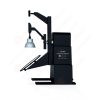

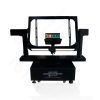
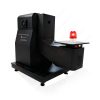











연성 케이블 토크 테스트 장치
사용자 설명서
적용 할 수있는 LISUN models: LS-B47
1. 장비에 대한 기본 이해
1.1 Scope of Equipment Application
This device is suitable for torque testing of flexible cables for household and similar uses.
It is primarily used in electrical product quality inspection laboratories, the quality control departments of manufacturers of plugs, sockets, and flexible cables, third-party testing organizations, and for the inspection of products entering or leaving the country.
1.2 적용 가능한 표준
Strictly in accordance with Clause 23.2 and Table 18 of GB/T 2099.1-2021 “Plugs and Sockets for Household and Similar Uses—Part 1: General Requirements” (Clause 23.2 of IEC 60884-1:2022, Table 21), and testing has been conducted.
Conduct torque tests on the flexible cable and its mounting components in accordance with the torque values and test durations specified in the standard.
1.3 전자 문서 다운로드
We have already sent the download links for the digital user manual, calibration certificate, warranty card, and other documents via email at the time of shipment. Please download them as soon as possible. If you have not received the email, please contact us to request the download links again.
2. 사용상의 주의
2.1 Operating Environment Safety Requirements
Operating environment temperature: 15°C to 35°C; relative humidity: 45% to 75%; no condensation, no corrosive gases, and no airborne dust.
Place the device on a level, stable workbench with at least 30 cm of clearance on all sides, away from sources of vibration.
2.2 Safety Guidelines for Operational Procedures
During testing, do not extend any body parts or other unrelated objects into the test area to prevent crush injuries or interference with the testing process.
The specimen must be securely clamped to prevent it from falling out or being ejected during the test.
Do not under any circumstances add additional weights to perform non-standard tests or forcefully rotate the torque disc, to prevent equipment damage and safety incidents.
3. Introduction to the Test Setup
그림 3-1를 참조하세요.
| 번호 | 주의 사항 |
| ① | Weights: one each of 2 N, 3 N, 5 N, 7 N, and 8.5 N, corresponding to torques of 0.1, 0.15, 0.25, 0.35, and 0.425 N·m, respectively. |
| ② | A clamp used to secure components of a flexible cable, such as a plug or a portable receptacle |
| ③ | Flexible Cable Clamp, used to secure flexible cables |
| ④ | Chuck wrench, used to loosen or tighten the chuck |
| ⑤ | Torque disc, used to suspend weights in order to apply torque to the flexible cable and its mounting components |
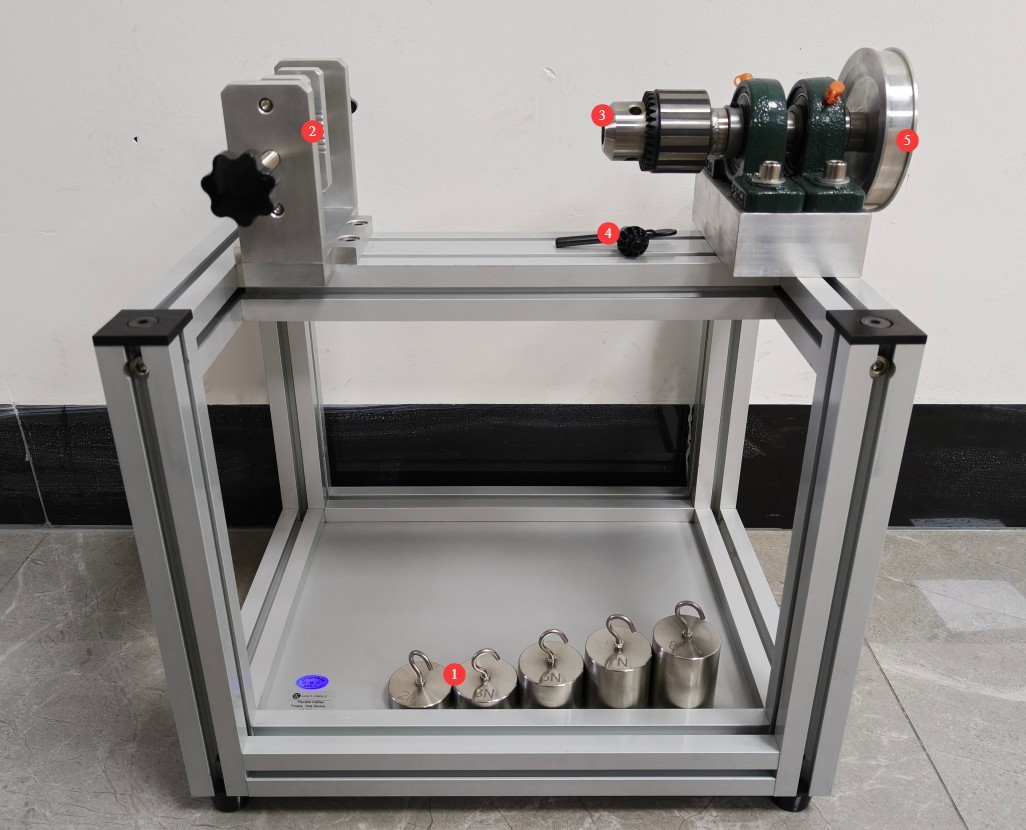
그림 3-1
4. Torque Testing of Flexible Cable Mounting Components
4.1 시험 조건
According to the standard, after completing the flexible cable tensile strength test (using the LS-B07 Retention Tensile Force Test Device for Soft Cable), the torque test on the flexible cable fasteners must be performed immediately.
4.2 테스트 매개변수
The flexible cable must be subjected to the torque for at least 1 minute.
See the table below for the torque test values of the flexible cable fasteners.
| Rating of Plugs or Portable Power Strips | Flexible Cable (Number of Conductors × Nominal Cross-Sectional Area in mm²) | ||||
| 2 × 0.5 | 2 × 0.75 | 3 × 0.5 | 3 × 0.75 | (2 or more) × 1 or greater | |
| ≤16 A, 250 V | 0.1 N · m | 0.15 N · m | 0.25 N · m | 0.25 N · m | |
| 16 A and > 250 V | - | - | - | - | 0.35 N · m |
| >16A | 0.425 N · m | ||||
4.3 시험 절차
Refer to Chapter 3 for instructions on installing and securing the specimen. After suspending the appropriate weight on the torque plate as described in Section 4.2, begin the test and start the timer. Ensure that the weight does not sway and remains suspended in the air throughout the test. The test ends after 1 minute; remove the weight and take down the specimen.
4.4 시험 결과 해석
After completing the tensile and torque tests on the flexible cable, evaluate the results according to the following standards.
Plugs equipped with flat copper-clad flexible wires are not subjected to torque testing.
After the test, the displacement of the flexible cord shall not exceed 2 mm. For electrical accessories with detachable wires, the wire ends shall not show any noticeable movement within the terminals; for electrical accessories with non-detachable wires, the electrical connections shall not be disconnected.
To measure longitudinal displacement, make a mark on the flexible cable approximately 20 mm from the end of the test specimen or the cable protection device before the cable is subjected to tensile force.
For electrical accessories with non-detachable cords, if the test specimen has no clearly defined end or no flexible cable protection device, an additional mark must be made on the body of the test specimen.
While the flexible cable is under tension, measure the displacement of the markings on the cable relative to the test specimen or the cable protection device.
5. 테스트 후 절차
5.1 Device Reset
Remove the specimen and weights to prevent forces from being applied when the test is not in progress.
5.2 샘플 준비
Separate the samples that passed and failed the test, label them clearly, and avoid mixing them up.
5.3 Cleaning and Tidying Up the Test Site
Use a lint-free, soft cloth to wipe away dust and debris from the surfaces of fixtures, chucks, brackets, and devices. Do not rinse the equipment directly with water.
Organize the tools and weights on the workbench, arrange them neatly, and clean up any debris left over from the experiment.
6. 정기 유지보수 및 관리
6.1 정기 점검
Every 3 months, apply a small amount of neutral lubricating grease to critical parts, such as the torque disc bearings, to prevent rust and seizing.
6.2 장기 보관 및 유지 관리
After routine maintenance is complete, cover the entire unit with a dust cover and store it in a dry, well-ventilated warehouse; coat the weights with rust-preventive oil and store them separately to prevent rust and deformation.
6.3 Calibration Interval Requirements
기기의 정확성과 신뢰성을 보장하기 위해, 공인된 제3자 계측 연구소에 정기적으로 보내 교정을 받는 것이 좋습니다. 권장 교정 주기는 12개월입니다. 사용자는 사용 빈도, 환경 조건 및 품질 시스템 요구 사항을 고려하여 구체적인 교정 주기를 결정할 수 있습니다.
7. 문제 해결 및 일반적인 문제 해결 방법
| 결함 증상 | 가능한 원인들 | 순서 |
| The torque disc continues to rotate, and torque cannot be applied. | The specimen fixture end or chuck end is not securely fastened | Please refer to Chapter 3 and make sure both ends are securely fastened before trying again. |
| The torque disc cannot rotate; torque cannot be applied. | Torque Plate Bearing Seizure | Please refer to Section 6.1 for bearing maintenance to ensure that the torque disc rotates freely and without binding when no test specimen is installed. |