추상
During outdoor service of materials, sunlight irradiation, alternating temperature‑humidity conditions and rain spray are primary triggers for fading, mechanical property degradation and surface cracking failures. Xenon Arc Test Equipment replicates the full‑spectrum of natural sunlight via xenon‑arc lamps, establishing accelerated cyclic environments of illumination, high temperature, condensation and water spray. It compresses multi‑year natural aging cycles into several weeks. ISO 4892‑2 and ASTM G155 are two core global general standards for accelerated xenon‑arc weathering testing of non‑metallic materials, setting mandatory specifications for equipment spectral matching, irradiance control, temperature‑humidity cycles, filter systems and test operating procedures. Taking LISUN XD‑WAT‑Ci3000 water‑cooled xenon‑arc weathering test chamber as the research carrier, this paper describes multi‑industry application scenarios of Xenon Arc Test Equipment, systematically sorts out standardized test operating procedures under the two standards, and illustrates the hardware basis for standard compliance through a parameter comparison table. It provides complete practical references for compliance weathering tests of coatings, plastics, automotive components, photovoltaic building materials and textile materials.
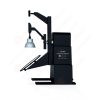
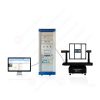
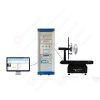
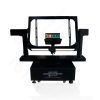
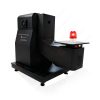
Natural outdoor weathering tests suffer from long test cycles, uncontrollable environmental variables and poor data repeatability, which fail to meet time‑sensitive demands for new‑material R&D iteration, finished‑product quality inspection and batch testing at third‑party laboratories. Therefore, Xenon Arc Test Equipment has become a core laboratory instrument for evaluating material weathering performance. As a classic water‑cooled Xenon Arc Test Equipment, LISUN XD‑WAT‑Ci3000 is equipped with a 4500 W long‑life xenon‑arc lamp with over 90 % spectral matching to natural sunlight. It is fitted with multiple switchable optical filters, closed‑loop irradiance control system and independent temperature‑humidity spray modules. Pre‑loaded with complete standard routines for ISO 4892‑2 and ASTM G155, the unit allows direct recall of standard cycles without manual parameter entry, serving as a universal tester for R&D, quality inspection and scientific research.
ISO 4892‑2 specifies laboratory xenon‑arc exposure methods for plastics. It distinguishes two simulation conditions: outdoor daylight and behind‑glass exposure, and defines filter selection, irradiance ranges, black‑panel temperature and spray cycle durations. ASTM G155 is a general practice for xenon‑arc exposure of non‑metallic materials, covering coatings, textiles, rubbers and automotive parts. It imposes unified constraints on equipment calibration, parallel specimen testing, data logging and result evaluation. Though sharing overlapping parameters, the two standards differ in detailed test conditions. Only by adopting hardware‑compliant Xenon Arc Test Equipment and following step‑by‑step test procedures can test data achieve international recognition.
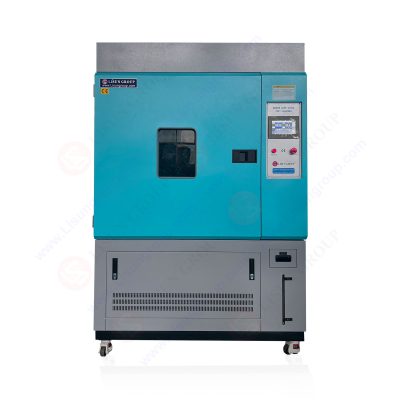
Benefiting from comprehensive environmental simulation capabilities, LISUN XD‑WAT‑Ci3000 Xenon Arc Test Equipment covers five major application sectors: material R&D, finished‑goods quality inspection, automotive manufacturing, construction‑photovoltaic industry and scientific testing institutes, with distinct test priorities for each sector.
For new‑material formulation R&D, this Xenon Arc Test Equipment can hold up to 22 specimens of 145 mm × 70 mm. R&D personnel load multiple groups of plastics, coatings and textile specimens with different additive and resin formulations and run test cycles defined by ISO 4892‑2. Before and after aging, spectrophotometers, gloss meters and tensile testers are used to collect data such as colour difference ΔE, gloss retention and tensile strength. By comparing aging degradation of different formulations, developers can select optimal weathering‑resistant formulas and greatly shorten new‑material development cycles. For instance, in R&D of outdoor modified polypropylene plastics, accelerated xenon‑arc tests quickly evaluate how UV‑stabilizer dosage suppresses cracking and yellowing and prevent in‑service failures in long‑term outdoor applications.
In finished‑product quality inspection for industrial goods, building materials such as aluminium‑plastic composite panels, photovoltaic module backsheets and waterproof membranes require factory weathering sampling tests according to GB/T 16422.2 (identical to ISO 4892‑2). Xenon Arc Test Equipment simulates alternating conditions of high‑temperature summer exposure and heavy rain wash‑off to detect surface chalking, delamination and discoloration defects. Only products passing accelerated aging for specified durations can satisfy market‑access requirements for domestic and overseas building‑material markets and reduce after‑sales risks in end‑user engineering projects.
The automotive industry represents a high‑frequency application for Xenon Arc Test Equipment. Automotive interior dashboard fabrics, exterior bumpers, automotive paints and safety glass require different test conditions. Exterior components adopt ISO 4892‑2 Method A daylight‑filter cycles for open‑air exposure simulation. Interior parts follow ASTM G155 behind‑glass conditions to replicate high‑temperature sunlight inside closed vehicles. The equipment automatically switches illumination, high‑temperature and spray routines to verify fading, embrittlement and paint blistering over long‑term service, complying with original‑equipment‑manufacturer material specifications from Ford, Volkswagen and General Motors.
Moreover, this Xenon Arc Test Equipment supports fundamental aging‑mechanism research for universities and material research institutes. Researchers can custom‑set irradiance, temperature and humidity cycles to isolate individual effects of UV radiation, humidity and temperature on polymer chain scission and cross‑linking. Third‑party testing laboratories leverage pre‑programmed standard routines to undertake commissioned weathering tests for coatings, textiles, electronic plastics and outdoor rubber‑plastic products and deliver test reports recognised under ISO and ASTM frameworks.
Both standards impose rigid requirements on light source, irradiance, temperature‑humidity, filter systems and specimen‑carrying capacity for Xenon Arc Test Equipment. Hardware specifications of LISUN XD‑WAT‑Ci3000 water‑cooled xenon‑arc weathering chamber fully meet standard limits. The table below compares key unit specifications against standard compliance requirements.
Table 1 Core parameters of LISUN XD‑WAT‑Ci3000 Xenon Arc Test Equipment and compliance requirements of ISO 4892‑2 and ASTM G155
| 매개 변수 항목 | LISUN XD‑WAT‑Ci3000 Specification | Mandatory Requirement of ISO 4892‑2 | Mandatory Requirement of ASTM G155 | 규정 준수 참고 사항 |
|---|---|---|---|---|
| Xenon‑lamp Power and Service Life | 4500 W single lamp, rated service life 2000 h | Lamp spectral match to natural sunlight ≥90 %; replace lamp upon end of service life | Stable irradiance output for high‑power lamps | Built‑in lamp‑replacement reminder prevents spectral deviation from standard requirements |
| 유효 노출 면적 | 2188 cm² | Irradiance uniformity deviation over specimen area ≤±5 % | Rotating specimen rack to mitigate illumination non‑uniformity | Stainless‑steel rotating drum ensures synchronous exposure for parallel specimens |
| Irradiance Control Range | 0.1‑5000 W/m² closed‑loop control; 0.3‑1.6 W/m² precise adjustment @340 nm | 0.51 W/m² @340 nm for daylight condition; 1.10 W/m² @420 nm for behind‑glass condition | 0.35‑0.75 W/m² @340 nm for outdoor exposure | Touch‑screen irradiance adjustment with automatic lamp‑decay compensation to sustain stable continuous irradiance as required by standards |
| 온도 제어 범위 | Ambient to 85 °C, accuracy ±2 °C; independent black‑panel / black‑standard temperature monitoring | Black‑panel temperature 65±3 °C for daylight filter; 55±3 °C for behind‑glass filter | Adjustable black‑panel temperature 50‑70 °C with independent sensor acquisition | Multi‑point temperature sensors with automatic heating and cooling compensation |
| 습도 조절 범위 | 20‑95 %RH, control accuracy ±3 %RH | 50‑70 %RH during illumination phase; high‑humidity cycles during spray phase | Customisable wide‑range cycles 30‑95 %RH | VibraSonic humidification system eliminates humidity lag and matches alternating dry‑wet cycles specified in standards |
| Spray System Specifications | Adjustable water pressure 0.12‑0.15 MPa; dual‑side front‑rear spray via 0.8 mm orifices | Method A cycle: 102 min light‑dry + 18 min light‑spray | Periodic intermittent spray for rain simulation | Programmable spray pressure and duration fully replicate standard dry‑wet cycles |
| 필터 시스템 | Freely switchable borosilicate, soda‑lime and quartz filters | Two standard filter sets: daylight filter for Method A, behind‑glass filter for Method B | Compatible with daylight, behind‑glass and extended‑UV filter conditions | Quick‑release filter assembly; no extra accessories needed for switching between different‑standard tests |
| 교정 기능 | Touch‑screen one‑touch calibration routines for irradiance, temperature and humidity | Irradiance and temperature‑sensor calibration mandatory before test start | Calibrate key parameters before each test batch | Standard calibration accessories allow on‑site compliant calibration without external laboratory service |
| Pre‑loaded Standard Routines | 14 pre‑installed industry‑standard programs including ISO 4892‑2 and ASTM G155 | One‑touch recall of fixed cycle parameters | Supports custom storage for automotive and building‑material‑specific test cycles | Multi‑language touch‑screen direct access to standards reduces manual‑setup errors and improves test compliance |
As shown in Table 1, LISUN XD‑WAT‑Ci3000 Xenon Arc Test Equipment fulfils all mandatory technical clauses of the two international standards regarding light source, environmental control and accessory systems, forming the hardware foundation for compliant xenon‑arc weathering tests. Simplified test chambers lacking corresponding control functions cannot deliver ISO‑ and ASTM‑recognised test data.
바탕으로 LISUN XD‑WAT‑Ci3000 Xenon Arc Test Equipment and general operating logic of ISO 4892‑2 and ASTM G155, the complete test workflow includes seven phases: specimen pre‑treatment, equipment inspection‑and‑calibration, test‑condition configuration, specimen mounting, continuous exposure running, specimen conditioning and performance measurement, and result evaluation. Differences between the two standards lie mainly in cycle parameters and filter selection while fundamental operating steps remain consistent.
Phase one covers specimen preparation and baseline‑data acquisition. Specimens shall be cut to uniform dimensions as specified by standards with clean surfaces free of oil stains and scratches. Prepare at least three parallel specimens for each sample group (statistical requirement specified in ASTM G155), together with reference specimens of known weathering performance. Record initial baseline values including colour difference, surface gloss and tensile strength by spectrophotometer, gloss meter and tensile tester. Label specimens unambiguously to avoid mixing different formulations or batches.
Phase two covers full‑unit inspection and compliant calibration of Xenon Arc Test Equipment. Check accumulated lamp operating hours and replace the xenon‑arc lamp if approaching its 2000‑hour rated lifetime. Verify cooling‑water resistivity below 5 μS/cm and ensure spray pipelines are unobstructed and leak‑free. Launch touch‑screen calibration routines to calibrate 340 nm irradiance probe, chamber‑air temperature and black‑panel temperature sensor, keeping deviations within standard allowances. Archive calibration records as attachments for test reports. Select optical filters according to target standard: fit borosilicate daylight filter for ISO 4892‑2 Method A outdoor exposure; replace with soda‑lime filter for Method B behind‑glass indoor exposure; deploy standard daylight filter assembly for ASTM G155 outdoor exposure.
Phase three is test‑condition setup. Recall corresponding standard routines on the unit touch‑screen. Default cycle for ISO 4892‑2 Method A is 102 min light‑dry plus 18 min light‑spray, irradiance fixed at 0.51 W/m² @340 nm, black‑panel temperature 65 °C and chamber humidity 60 %RH. General outdoor cycle for ASTM G155 sets irradiance at 0.55 W/m² @340 nm, black‑panel temperature 63 °C with spray intervals customisable per material category. Create and save custom routines for automotive or building‑material‑specific standards to avoid repeated manual input.
Phase four deals with specimen mounting. Lay specimens evenly on the rotating‑drum rack with test surfaces facing the xenon‑arc lamp. Maintain minimum 10 mm spacing between specimens for uniform irradiance. Block vacant rack positions with standard black panels to prevent chamber‑environment fluctuations. Close chamber door and confirm light‑tight and air‑tight sealing.
Phase five covers continuous test run management. Stabilise set‑points for 30 minutes before starting test timing. Xenon Arc Test Equipment automatically cycles illumination, heating, spray and condensation. Per both standards, open the chamber every 250 hours for visual inspection and photograph surface defects such as fading, cracking and blistering. Pause timing before opening the door; resume timing only after chamber irradiance, temperature and humidity return to set‑points. Log real‑time irradiance, black‑panel temperature and humidity curves throughout testing.
Phase six is specimen retrieval and standard conditioning. Upon completion of target total exposure duration, stop the chamber and take out specimens. Condition specimens for 4 hours under constant environment of 23 °C±2 °C and 50 %±5 %RH to eliminate transient performance changes caused by high temperature and high humidity during aging. Re‑measure colour difference, gloss and mechanical properties and calculate performance retention ratios against initial baseline data.
Phase seven is compliant result evaluation. Rate chalking and discoloration grades against standard reference charts and quantify colour‑difference ΔE values. Analyse degradation of tensile strength and elongation at break. ISO 4892‑2 focuses on basic weathering classification for materials. ASTM G155 requires comparison against reference‑specimen aging severity and validates test quality via dispersion of parallel‑specimen data. Final test reports shall include equipment model, cycle parameters, calibration records and specimen performance datasets.
When performing tests with LISUN XD‑WAT‑Ci3000 Xenon Arc Test Equipment, critical procedural distinctions exist between the two standards. Mis‑configuration of test conditions will invalidate measured data.
Filter selection constitutes the most prominent difference. ISO 4892‑2 defines only two basic filter modes: daylight and behind‑glass without extended‑UV mode. ASTM G155 additionally offers enhanced‑UV filter combinations for automotive exterior parts and outdoor coatings requiring higher acceleration factors. Re‑calibrate irradiance after filter replacement to eliminate intensity errors caused by spectral changes.
Spray‑cycle requirements differ. ISO 4892‑2 Method A mandates periodic spray to simulate outdoor rainfall; spray shall be disabled for behind‑glass indoor conditions. ASTM G155 does not enforce spray cycles. Users may select continuous dry‑light or intermittent spray according to real‑world service conditions; spray is generally turned off for interior‑component testing.
Data‑traceability requirements vary. ASTM G155 imposes strict logging requirements: hourly irradiance, temperature and humidity history curves shall be fully stored. The bundled PC data‑acquisition software automatically exports full‑run logs for third‑party‑laboratory audit purposes. ISO 4892‑2 only requires documentation of key‑point parameters.
Both standards stress irradiance uniformity control for Xenon Arc Test Equipment. The rotating‑drum specimen rack must run continuously; static single‑side exposure of specimens is prohibited. Constant‑rotation design of LISUN XD‑WAT‑Ci3000 avoids local over‑irradiance or under‑irradiance and guarantees synchronous aging progress for multi‑group specimens.
Xenon Arc Test Equipment is essential laboratory hardware for evaluating long‑term outdoor service stability of non‑metallic materials. Equipped with complete light‑source, temperature‑humidity, spray and filter hardware, LISUN XD‑WAT‑Ci3000 water‑cooled xenon‑arc weathering test chamber satisfies all technical specifications of ISO 4892‑2 and ASTM G155, supporting test requirements across material R&D, industrial‑product quality inspection, automotive manufacturing, building‑photovoltaic industry and scientific‑research institutions. Strict adherence to full workflows specified in both standards — including specimen pre‑treatment, equipment calibration, condition setup, exposure control and result evaluation — together with pre‑programmed standard routines, minimises human‑induced errors and enables internationally‑recognised accelerated‑weathering data. Amid growing demands for new‑material development and import‑export‑product quality inspection, compliant Xenon Arc Test Equipment together with standardised test procedures are critical pillars for quality control of material weathering performance, shortening R&D cycles and satisfying market‑access testing requirements.
태그 :XD-WAT-Ci3000귀하의 이메일 주소는 공개되지 않습니다. 필수 필드가 표시됩니다 *

 영어
영어 中文简体
中文简体 Русский
 Español
 Português
 Türkçe
 العربية
 Deutsch
 Polski
 Italiano
 Français
 한국어
한국어 ไทย
ไทย Tiếng Việt
 日本語
日本語